
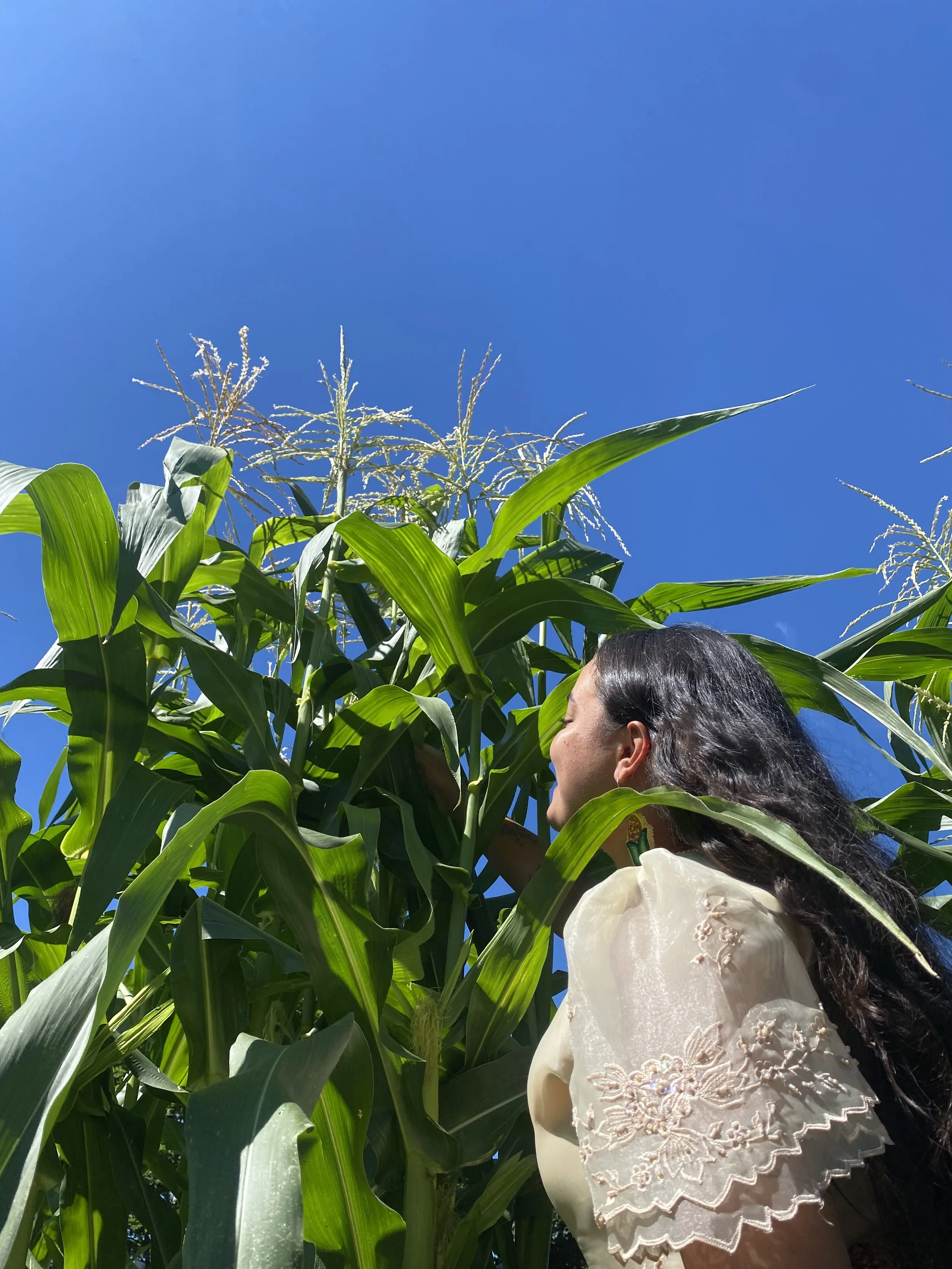
Kaitlin Rizarri is a researcher, farmer and writer based across Tkaronto (Toronto) and Ktaqmkuk (Newfoundland). She is Visayan Filipina and Ktaqmkukewa’j Mi’kmaw from Elmastukwek (Bay of Islands), and a PhD candidate in Social Justice Education at OISE, University of Toronto. She grew up in Tkarón:to Treaty 13, Anishinaabe and Haudenosaunee territory.
Kaitlin is trained in participatory and community based research through her work across community and academic research labs in both Tkaronto and Ktaqmkuk. Her personal research often thinks with plants across the cities and rural places where she works, attending to relationships with land, water, seeds, and place. She often thinks with farmers and land stewards.
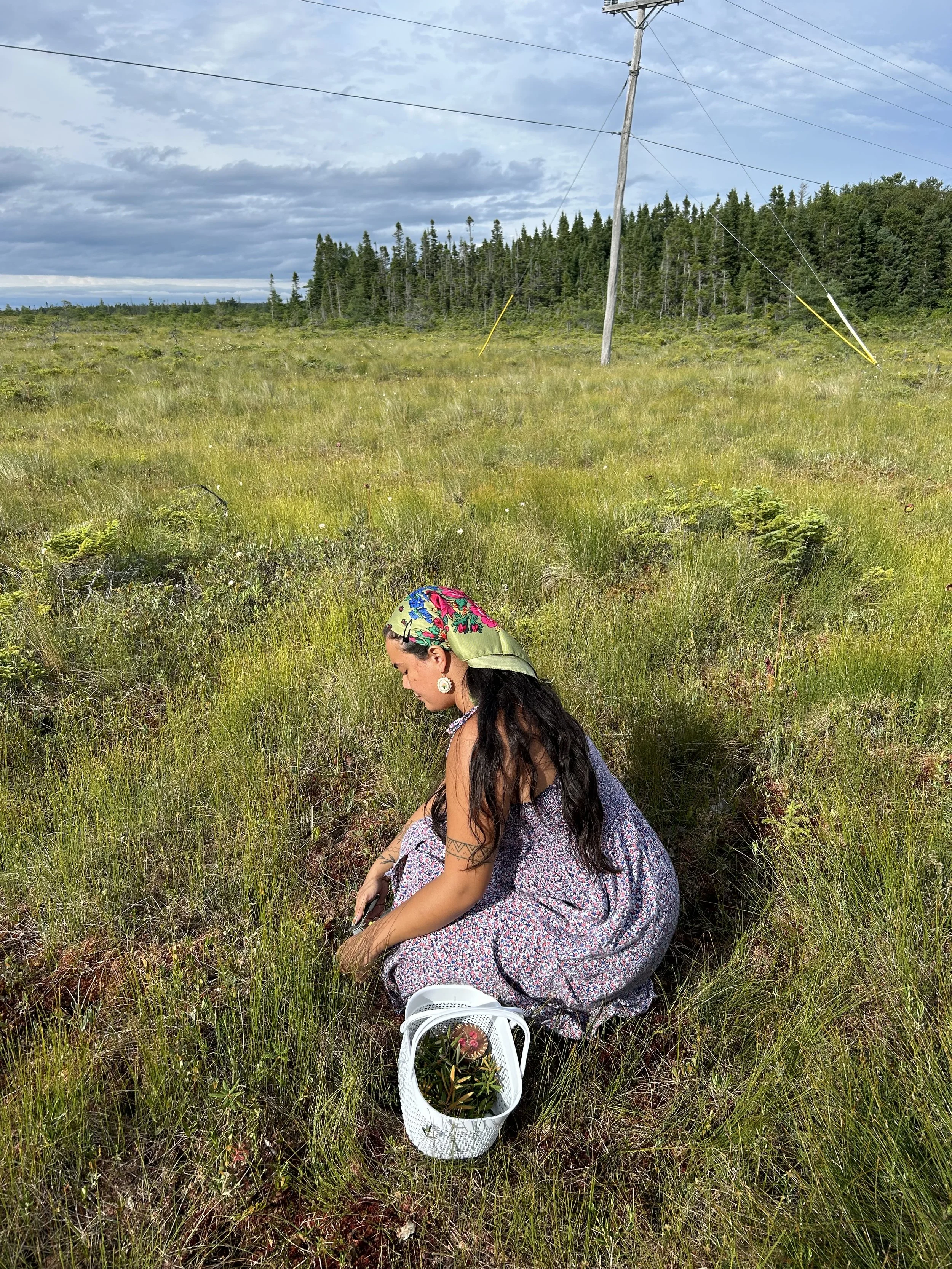
She has worked in food sovereignty for several years across Indigenous and Filipino education spaces and is trained in small-scale vegetable farm management. She now maintains her farming practice through Ate Kay’s Farm (pronounced ahh-tey), where she grows, forages, and works with herbs and flowers.
Extended Bio
Kaitlin Rizarri is a researcher, farmer and writer based across Tkaronto (Toronto) and Ktaqmkuk (Newfoundland). She is Visayan Filipina and Ktaqmkukewa’j Mi’kmaw from Elmastukwek (Bay of Islands), and a PhD candidate in Social Justice Education at the Ontario Institute for Studies in Education, University of Toronto. She grew up in Tkarón:to Treaty 13, Anishinaabe and Haudenosaunee territory.
Kaitlin is trained in participatory and community based research through her work across community and academic research labs in both Tkaronto and Ktaqmkuk. Her experience includes working with young people, community members and research teams to design research studies, curriculum, interviews, interpret stories, collaborative analysis, and creating accessible educational materials.
She believes research can be an important tool for communities when it is relational, desire-oriented and grounded in their priorities, knowledge and visions for the future. Her personal research often thinks with plants across the cities and rural places where she works, attending to relationships with land, water, seeds and place. She often thinks with farmers and land stewards.
Kaitlin has contributed to a wide range of research projects addressing Indigenous youth mental health, food systems, climate justice and migrant rights. She has experience with youth participatory action research, Indigenous research methodologies, institutional ethnography, photovoice and qualitative interviewing. Much of her work uses systems thinking to understand how people experience institutions and to document the changes communities identify as necessary for their wellness. She has supported projects with Indigenous peoples in Toronto and Mi’kmaw communities in Ktaqmkuk, as well as work related to land education and curriculum, including resources that invite young people to build relationships with seeds as living, more-than-human relations. She has translated research findings into accessible reports, zines and educational materials for community audiences.
Kaitlin has worked in food sovereignty for several years across Indigenous and Filipino education spaces. She is trained in small-scale vegetable farm management through her work with FoodShare Toronto and has managed gardens and farms from seed to harvest, with a focus on seed keeping and community learning. She supports young people in learning to grow food and often leads workshops on growing food, tea making and writing.
She now maintains her farming practice through Ate Kay’s Farm (pronounced ahh-tey), a small-scale tea and herbal farm where she grows, forages and works with herbs and flowers across Toronto and Ktaqmkuk. Her blends are centred on plants that can support people through grief, sleep, anxiety, depression and burnout, and on remedies that help people keep moving within their responsibilities. These blends grow from plants she has cultivated and shared with friends, family and community over many years.
Her farming practice is deeply committed to more-than-human life. She does not grow food, flowers and medicines only for humans, but tries to participate meaningfully in relationships with land, water, seeds, plants, animals and all of creation. Her practice is shaped by her own experiences and by knowledge held within her communities. She does not use pesticides or harmful additives, and she does not set traps while farming. Instead, she tries to place-make in ways that allow other life to flourish alongside the plants she grows.
Outside of academia and farming, Kaitlin is an Old Style Jingle Dress dancer who has learned from peers and mentors in Anishinaabe territory. She is passionate about supporting dance and wellness in Ktaqmkuk. While serving as Head Woman at the Miawpukek Mawiomi in 2026, she organized and hosted the first Old Style Jingle Dress Special on the island alongside her family and friends.
Kaitlin holds an Honours MA in Adult Education and Community Development from OISE, University of Toronto, and an Honours Bachelor of Business Law from Toronto Metropolitan University. Her education has brought together community learning, social justice, policy, research and food systems work. Across her writing, farming and research, she remains interested in what plants, land and water can teach about relationships, responsibility and possible futures.