I believe research can be an important tool for communities when it is relational, desire-oriented, and grounded in their own priorities and visions for change.
Research Philosophy
Selected projects & Research
Land Education Dreambook: Working with Seeds as More-Than-Human Relations
These activities were developed through the Youth Dreaming and Designing research project with the Tkaronto CIRCLE Lab for use in land education programs. They support young people in building relationships with seeds as living, more-than-human relations that hold memory, story, and connections across generations and places.
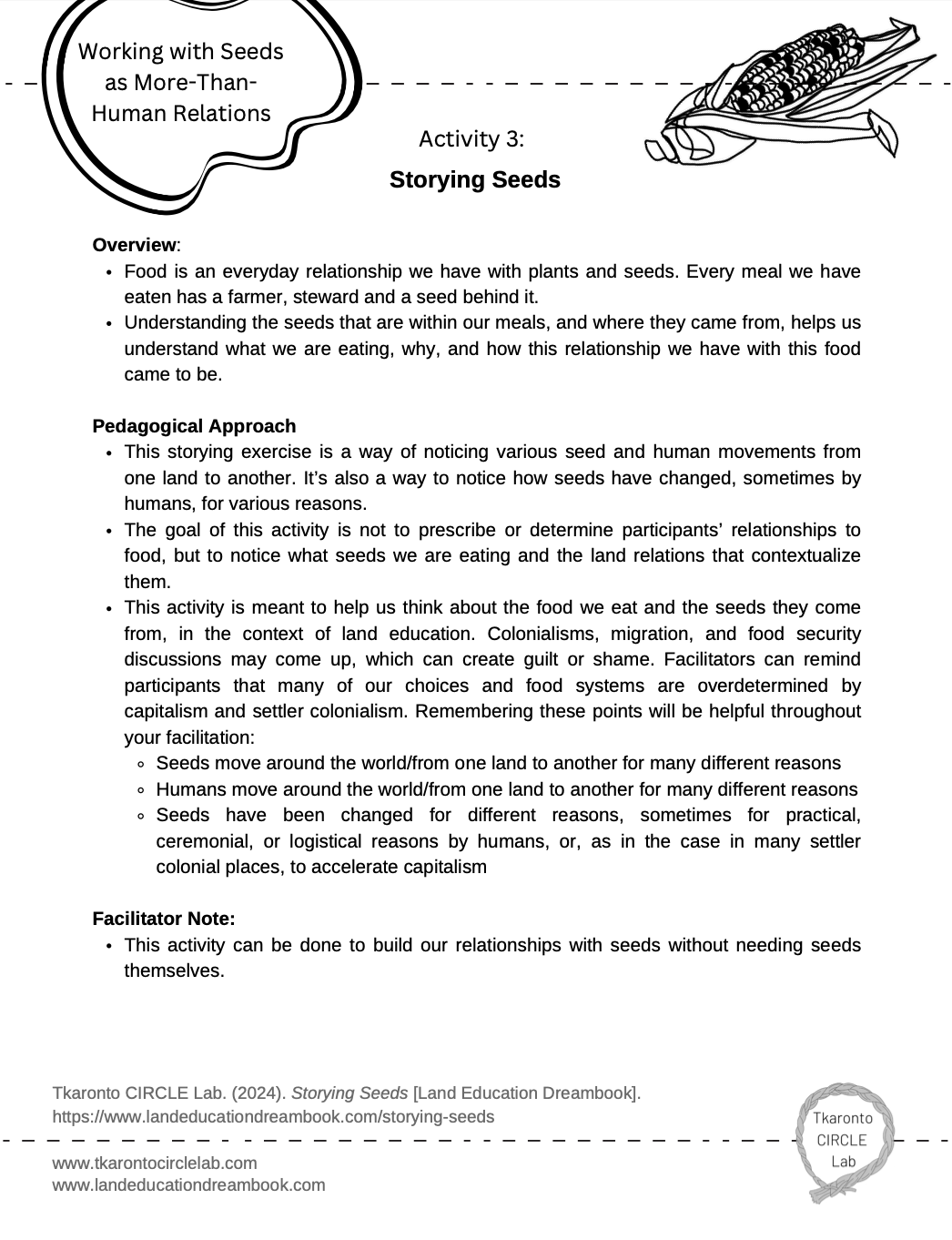
Three activities foreground this work: Getting to Know Seeds, Storying Seeds, and Seed Paper Dreams. Together, they invite participants to learn with and from seeds through observation, storytelling, food, letter writing, and growing.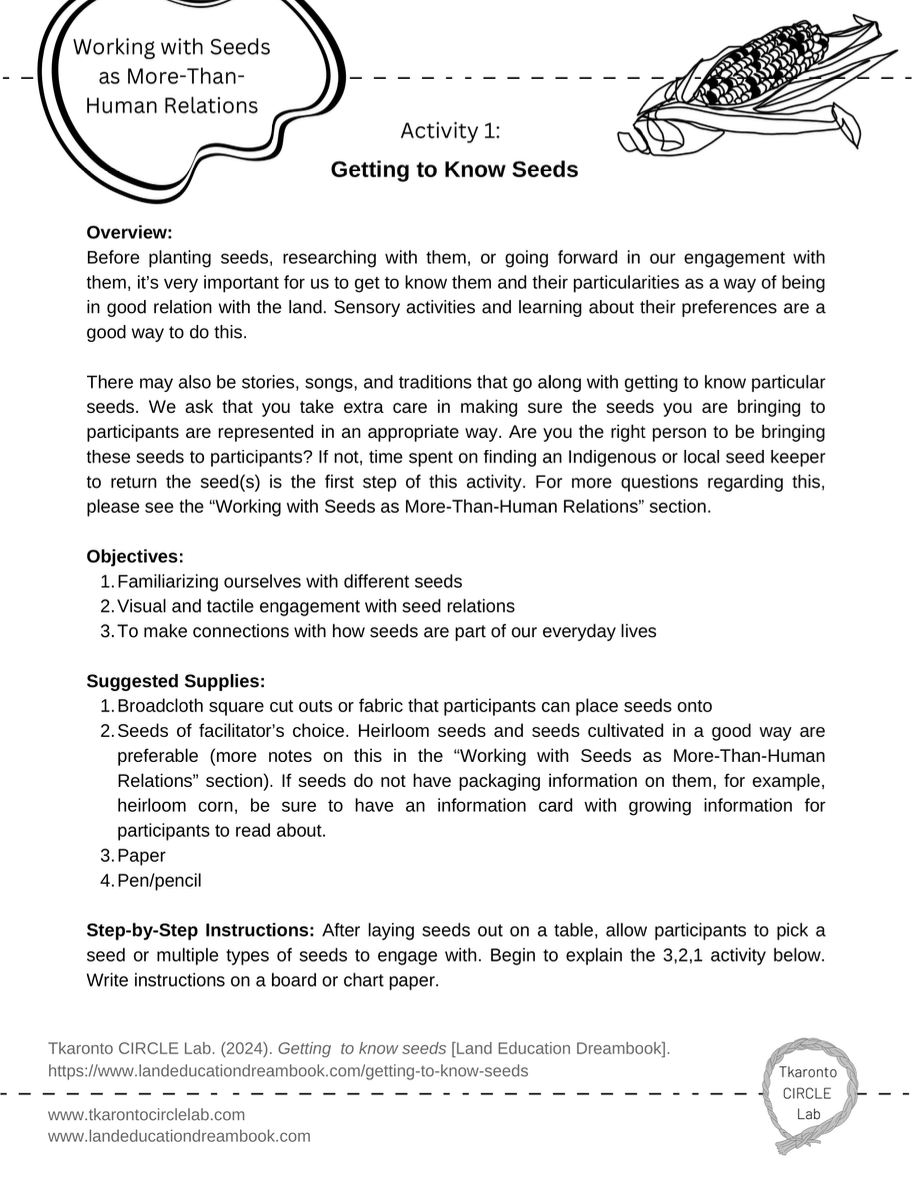
Getting to Know Seeds
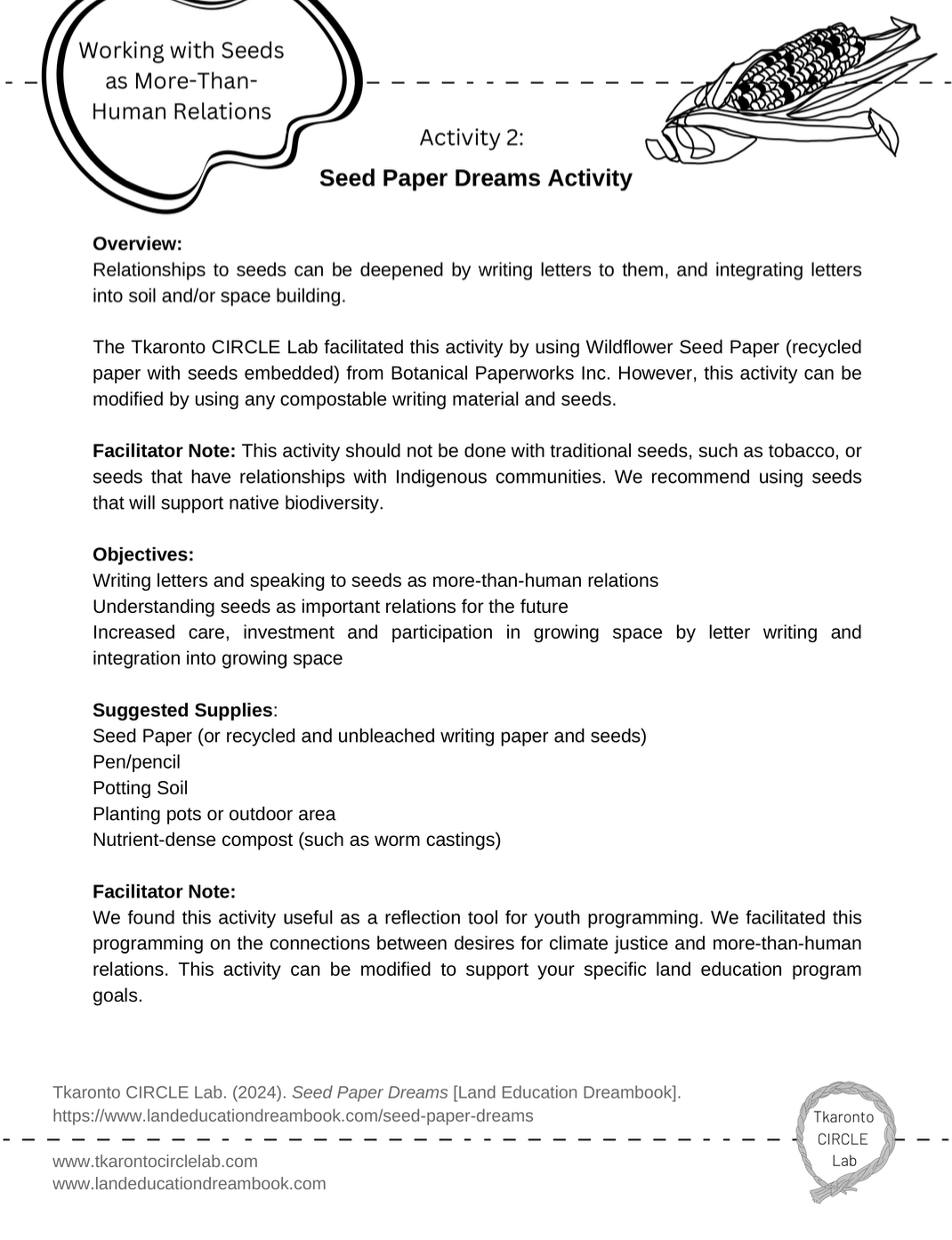
seed Paper Dreams
Storying Seeds
Filipinx/a/o Farmers in Tkaronto: Dreaming of Food Sovereignty
Created by Kaitlin Rizarri & Kristen Sison.
production and design by @bonesthrown.
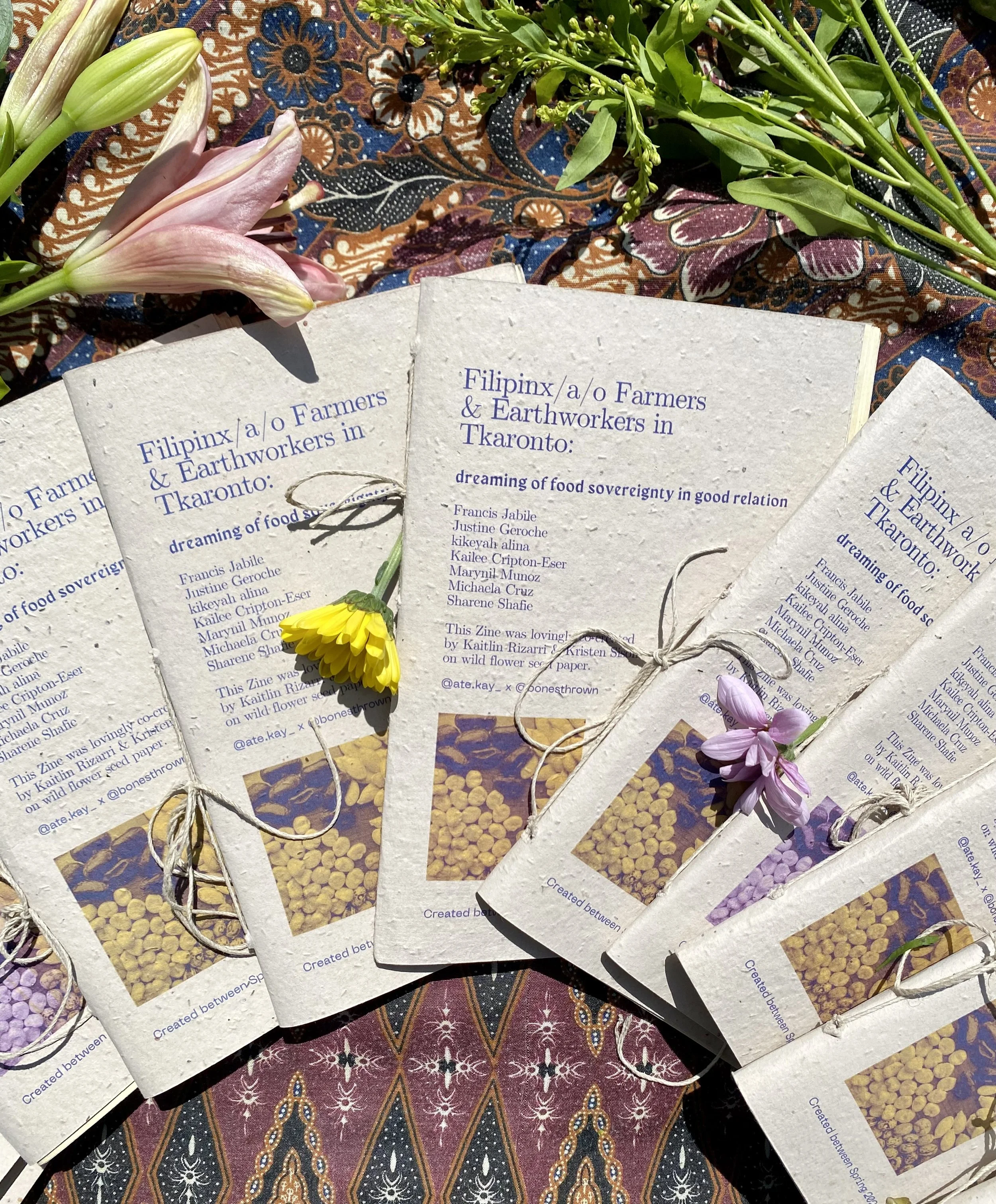
This zine is a snap-shot of my masters thesis which discusses Filipinx/a/o food sovereignty in Tkaronto. Interviewing seven Filipinx/a/o farmers whom I'm in relation with, Francis Jabile, Justine Geroche, kikeyah alina, Kailee Cripton-Eser, Marynil Munoz, Michaela Cruz and Sharene Shafie, we consider crucial questions of what it means to be farming and earth working on Indigenous lands. It celebrates the relation building with human and non-human beings that these earthworkers are doing here. This zine is intended to be an opening of a discussion of what Filipinx/a/o diasporic peoples want to bring into the future - in regards to making new, life-affirming food systems.
The first printed editions of this zine were printed on seed paper, to embody how our thoughts, dreams, tears, learning, and bodies grow with the seeds we plant.
Pkwimanue’katik: The Place where the blueberries are plenty
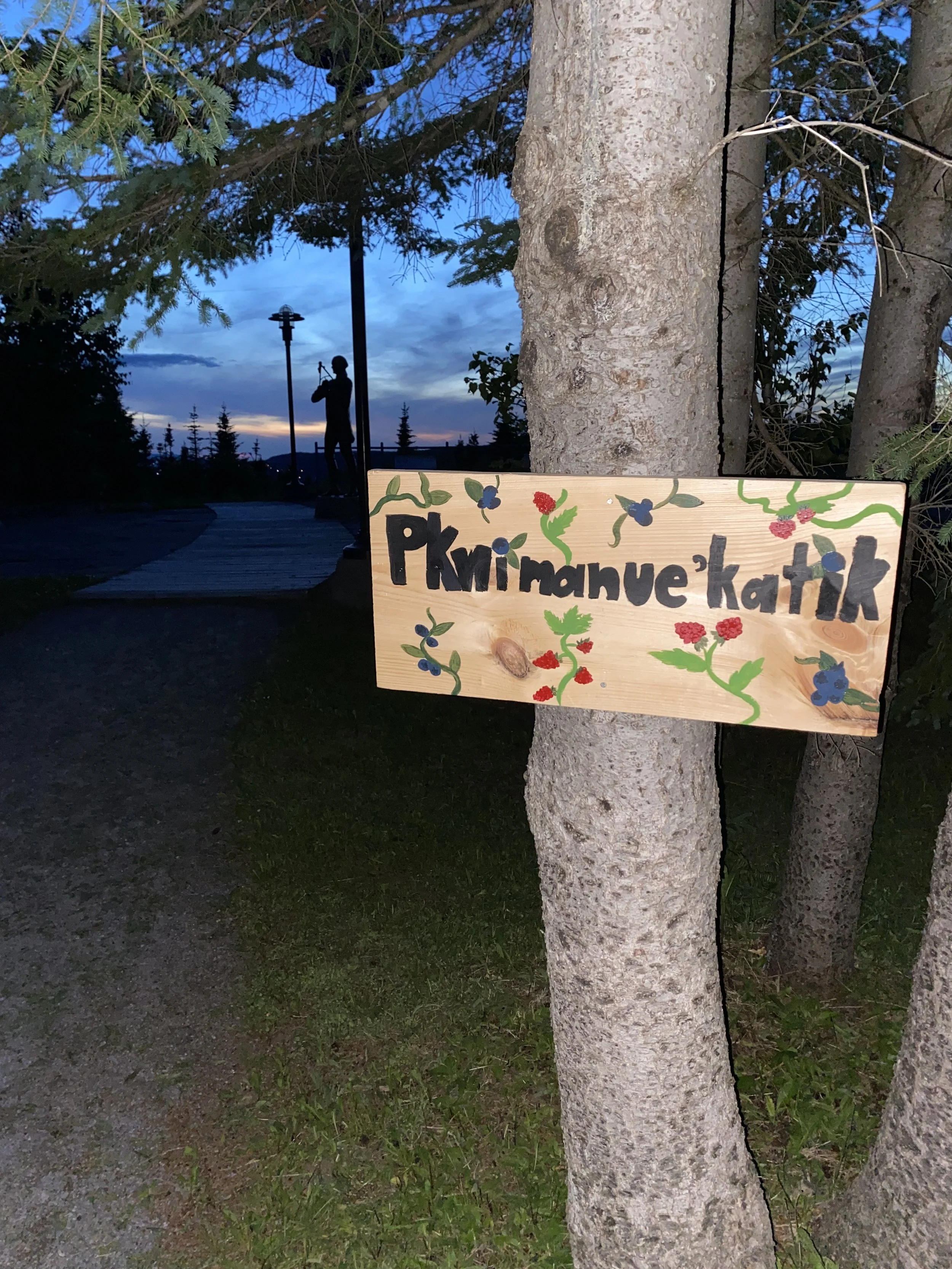
Pkwimanue’katik, meaning “the place where the blueberries are plenty,” is a Mi’kmaw place-naming and land education project rooted in my family’s knowledge of Elmastukwek (Bay of Islands) and our berry-picking places. My family lived across Elmastukwek before several relatives moved into Corner Brook for work at the mill. What is named colonially as the Captain Cook Lookout in Corner Brook, was once a shared berry-picking area where Mi’kmaw families, including my grandmother and great-grandmother, gathered blueberries and raspberries across generations.
The Captain Cook monument and plaques tell a familiar colonial story of discovery. Pavement, concrete infrastructure, tourism, and increased settler presence around the monument also changed the land and disrupted both berry growth and my family’s ability to continue harvesting there.
With guidance from a Mi’kmaw language speaker, my friends and I created a sign naming the place Pkwimanue’katik and placed it along the path so visitors encounter the Mi’kmaw name before reaching the colonial monument. I have also begun planting berries as a material response to the changes at the site.
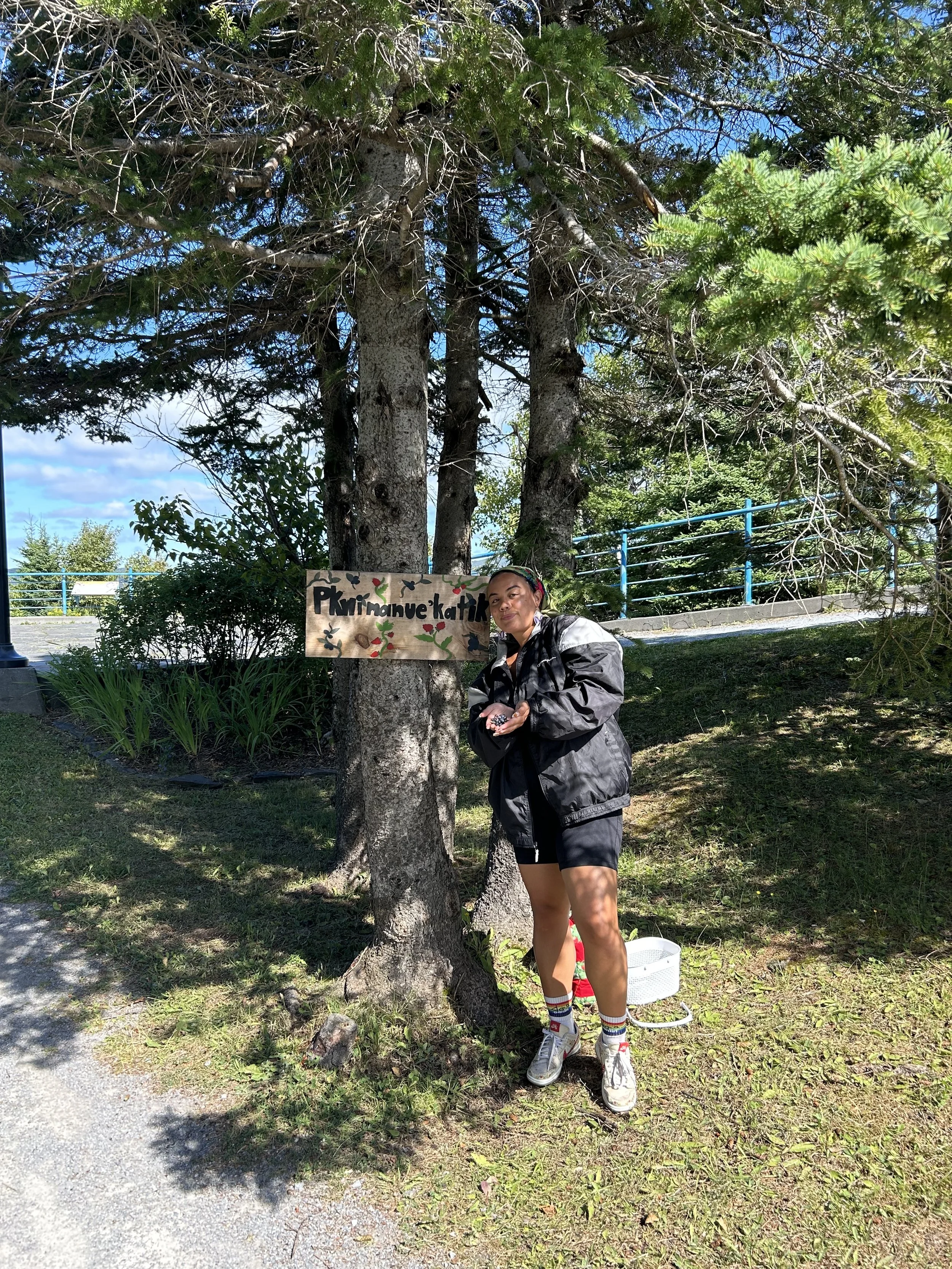
This work is still at the beginning. Community consultations and interviews with family, friends, berry pickers, and community members are underway to guide next steps, including berry restoration, public education, signage, formal place naming, and long-term community stewardship. At its core, the project is about affirming Mi’kmaw presence, family memory, and responsibility to place across generations.Selected Research projects i’ve supported
I’ve worked across several community and academic research labs, serving as research manager, coordinator and research assistant.
To see my full qualifications or CV, please contact me using the form.
-
Seneca Polytechnic College
I coordinate this project, which explores the future of food policy governance in Toronto. My work includes organizing community consultations, documenting and synthesizing shared priorities, conducting analysis, and writing reports and policy briefs to support collective visioning and food policy decision making in the city.
-
WATERR Lab, Memorial University
This developing research project considers how breast health research can better reflect the experiences, priorities and knowledge of Mi’kmaw and Indigenous peoples in Ktaqmkuk. I have supported the study’s design and co-presented its community-grounded approach at the Indigenous Health Research Symposium at Memorial University. We discussed how we designed our study specifically to support Ktaqmkukewaq Mi’kmaw and Indigenous peoples living in Ktaqmkuk.
-
Memorial University
I was a Community Based Researcher (CBR) on this project. My work included community engagement, conducting surveys and interviews, data entry and analysis preparation, and presenting our work at a learning symposium in Nujio'qonik, Ktaqmkuk (Bay St George, Newfoundland).
-
Finding Our Power Together Research Lab
This project examines how Indigenous youth in the Greater Toronto Area experience and navigate mental health systems. During my time at FOPT I coordinated this project, completed a systematic literature review, supported with Institutional ethnography, and led journal mapping and storytelling interviews.
-
Tkaronto CIRCLE Lab, University of Toronto, Ontario Institute for Studies in Education
This project explored how Toronto could better support Black, Indigenous and racialized youth leading climate action. I facilitated youth research programming and supported curriculum focused on relationships with lands and waters. Through this role, I developed activities for youth to deepen relationships with seeds and plants, which can be seen in the Land Education Dreambook.
-
Toronto Metropolitan University, Department of Communication
This project examined how food shaming affects Asian immigrant children and families in Canadian schools. I supported the Filipino community component through recruitment, literature review, ethics preparation and accessible research materials.
-
University of Toronto, Mississauga Campus
As a research assistant on this project, I supported the community consultation, research, and installation of an Indigenous garden on campus. I led planting the sweetgrass and strawberries.
-
Toronto Metropolitan University, Department of Sociology
This research examined migrant rights organizing in Toronto and questions of food security among Filipina and migrant communities. I supported the project through literature review, community engagement and data management.
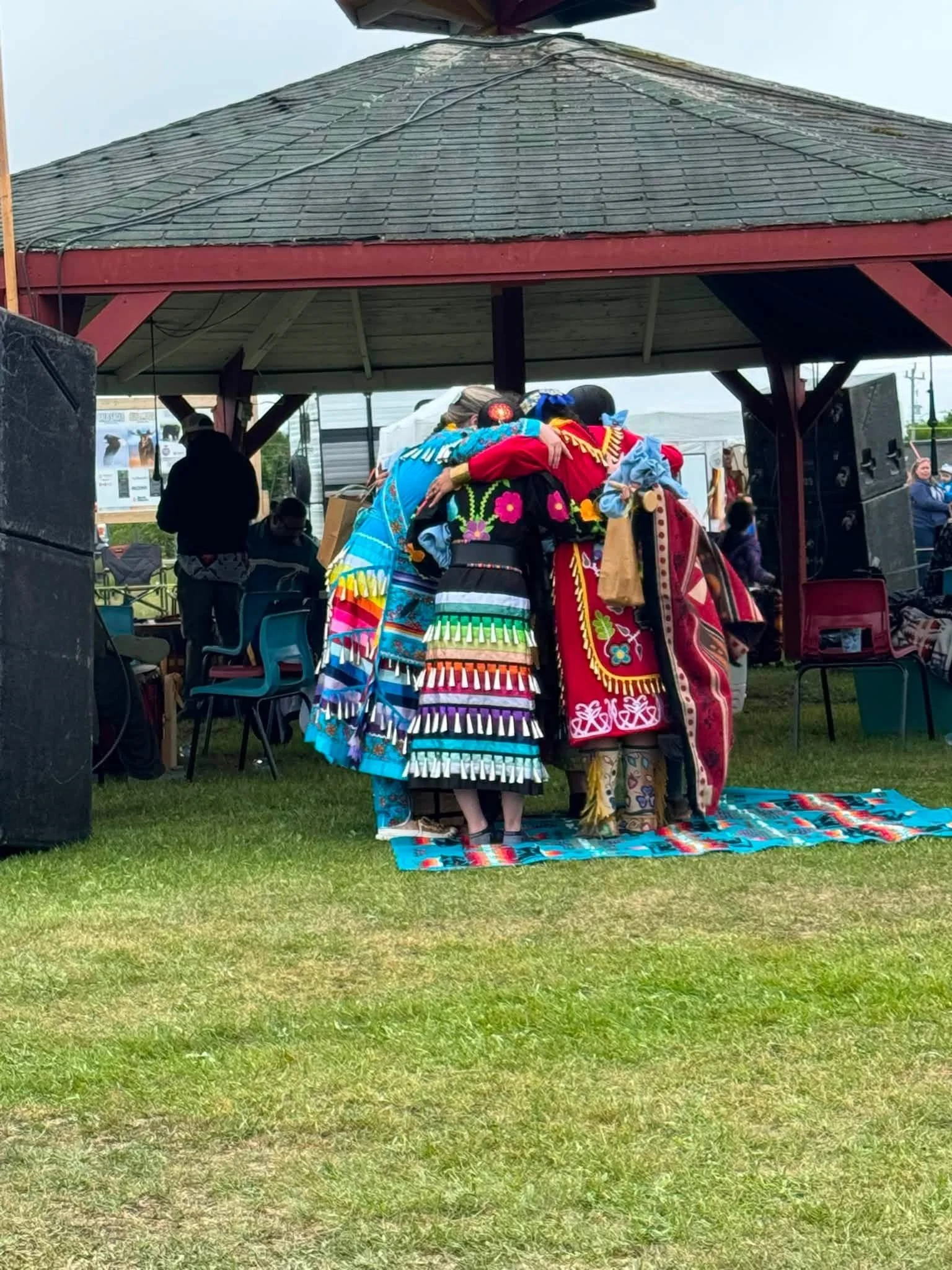
Dancing for our lands and waters Old Style Jingle Dress Special, Miawpukek Mawiomi 2026
While serving as Head Woman at the Miawpukek Mawiomi in July 2026, I organized and hosted the first Old Style Jingle Dress Special in Ktaqmkuk. I brought together my friends, family, mentors and speakers to share teachings to support the special and give back to the powwow circle.
Community
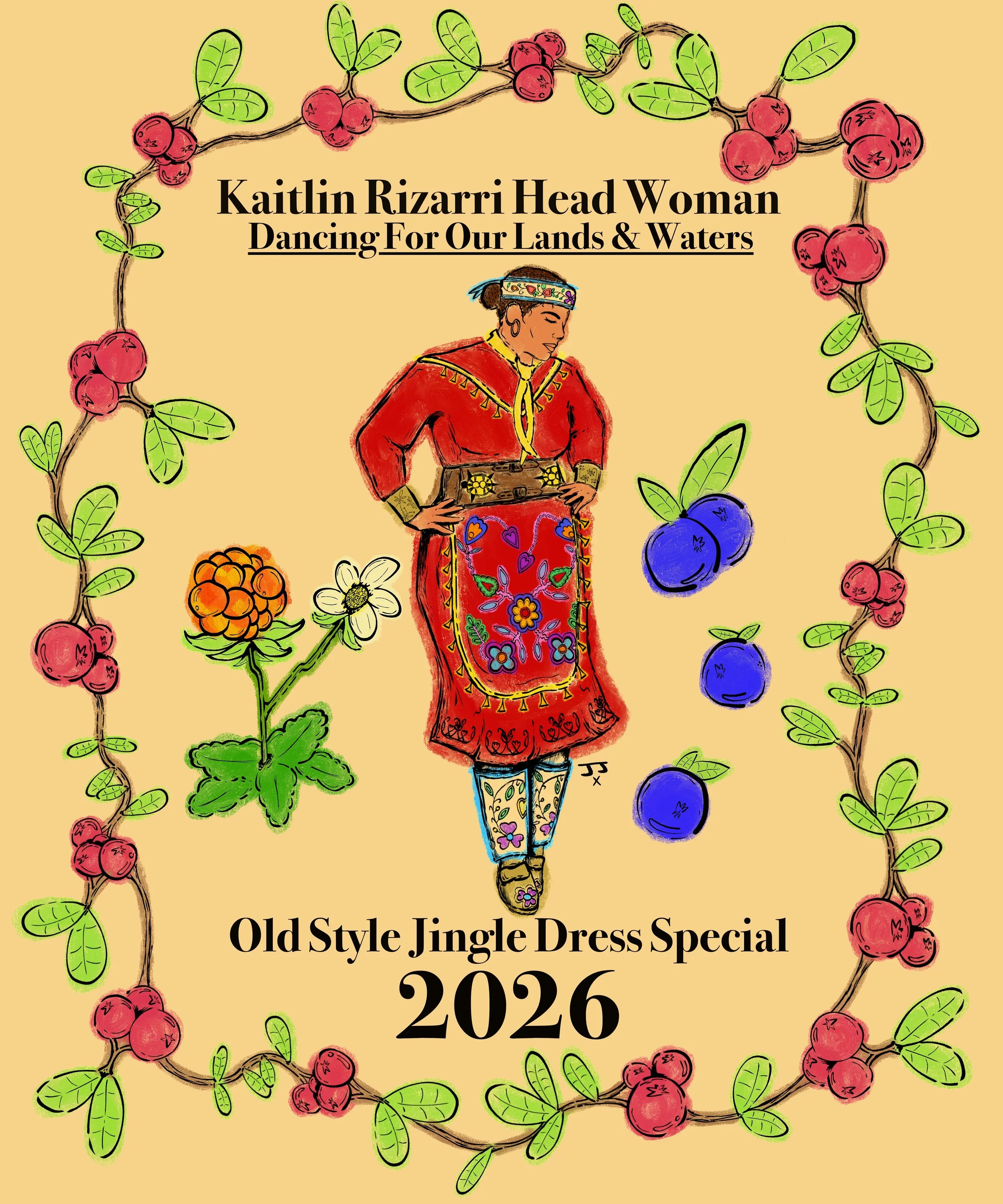
Artwork by Jacob Joe-Evans (Miawpukek First Nation)
Tkaronto Plant Life
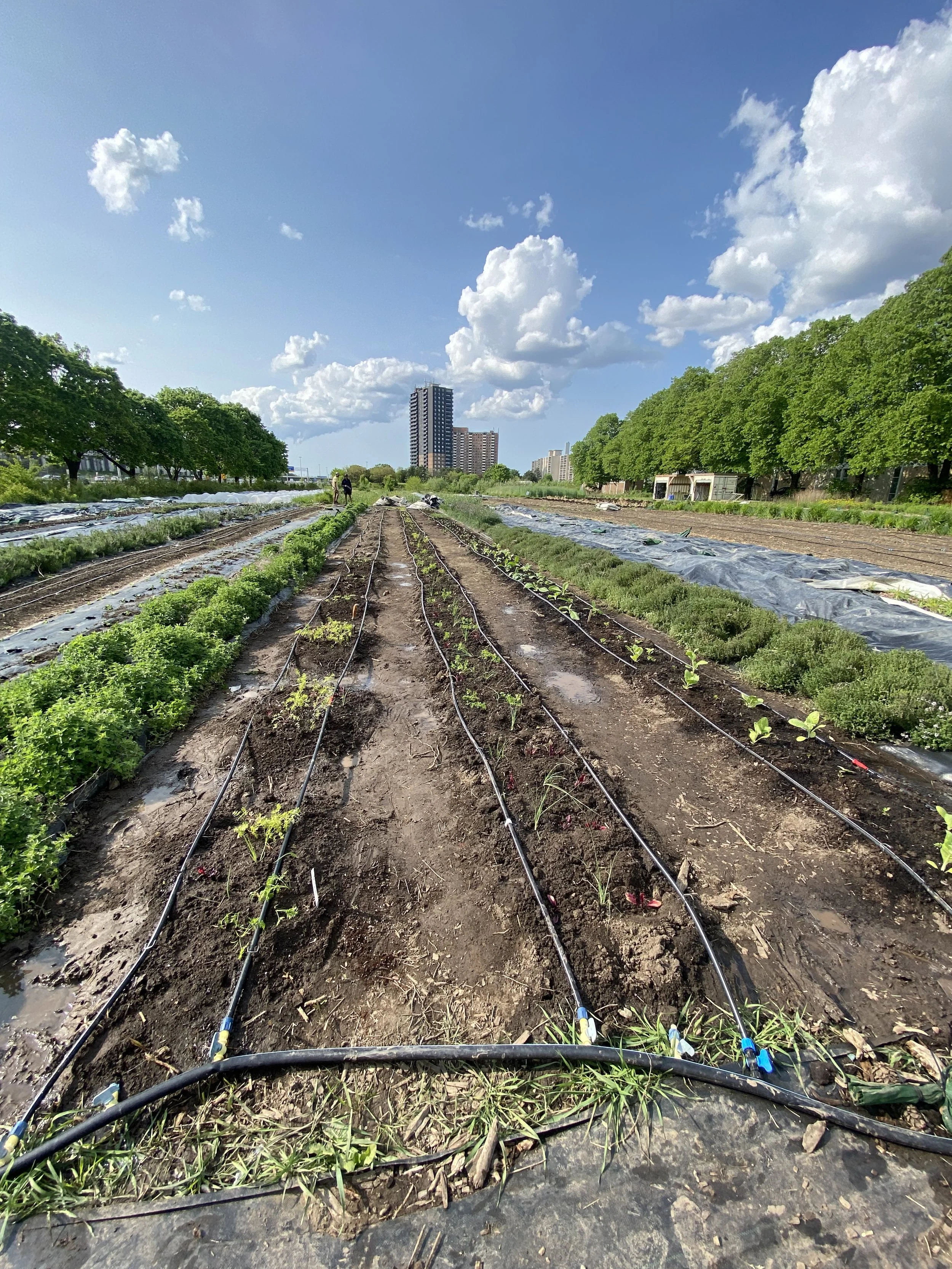
As a farmer and community educator with Tkaronto Plant Life, an Indigenous youth-led farm in Tkaronto, I supported small-scale farming and garden-based education at Dufferin Grove Park and Burnhamthorpe Collegiate Institute. Our work centred Indigenous food sovereignty, growing and stewarding plants from seed to harvest, often growing Anishinaabae and Haudenosaunee seeds. We also provided weekly workshops on urban farming and vegetable farm management for BIPOC youth.